
Why we invested in VoltSeal

VoltSeal: Building India's Distributed Battery Intelligence Layer
India's commercial and industrial energy ecosystem depends on one of the most expensive and carbon-intensive backup solutions available: the diesel generator. Despite the rapid growth of renewable energy capacity, the absence of affordable, accessible storage at the point of consumption continues to force industrial operators, warehouses, and commercial facilities into dependence on backup infrastructure that is both costly and emissions-intensive. VoltSeal is building the distributed storage and intelligence layer required to change that. By deploying behind-the-meter Battery Energy Storage Systems (BESS) at commercial and industrial sites, combined with a software-driven optimisation layer, the company enables C&I consumers to displace diesel dependence, actively manage energy costs, and participate in India's emerging distributed energy markets.
Strategic Industry and Market Context
India's power grid today reflects a structural imbalance between generation and utilisation. Renewable energy accounts for 43% of installed capacity but contributes only 22% of actual electricity generation, owing to the inherent intermittency of solar and wind. Solar energy is generated during the day while industrial demand peaks in the evening, creating a persistent temporal mismatch that is currently bridged through thermal generation and diesel backup. The result is a commercial and industrial sector spending INR 25-35 /unit on diesel-based backup power, several times the cost of stored or market-procured renewable alternatives. The Central Electricity Authority projects a storage requirement of 160 GWh by 2030, with demand growing not only at the utility level but increasingly within commercial and industrial segments where energy consumption is high, predictable, and structurally suited to storage deployment.
The economics of battery storage have undergone a meaningful transformation. Battery pack costs have fallen sharply, with Lithium Iron Phosphate chemistry offering superior cycle life and safety for industrial applications at an increasingly accessible price point. The Indian BESS market is estimated at USD 2.05 Bn and is growing at a CAGR of 27%, while the Virtual Power Plant market is projected to expand from USD 58 Mn in 2024 to USD 1.7 Bn by 2033. These trajectories are driven not by subsidy dependency but by the underlying economics of diesel displacement, rising time-of-day tariffs, and ESG obligations from global clients requiring fossil-fuel-free supply chains. As storage costs continue to decline and market infrastructure around instruments such as the Green Day Ahead Market matures, the commercial case for distributed BESS becomes progressively stronger across a wider range of C&I operators.
Key Advantages of VoltSeal's Model
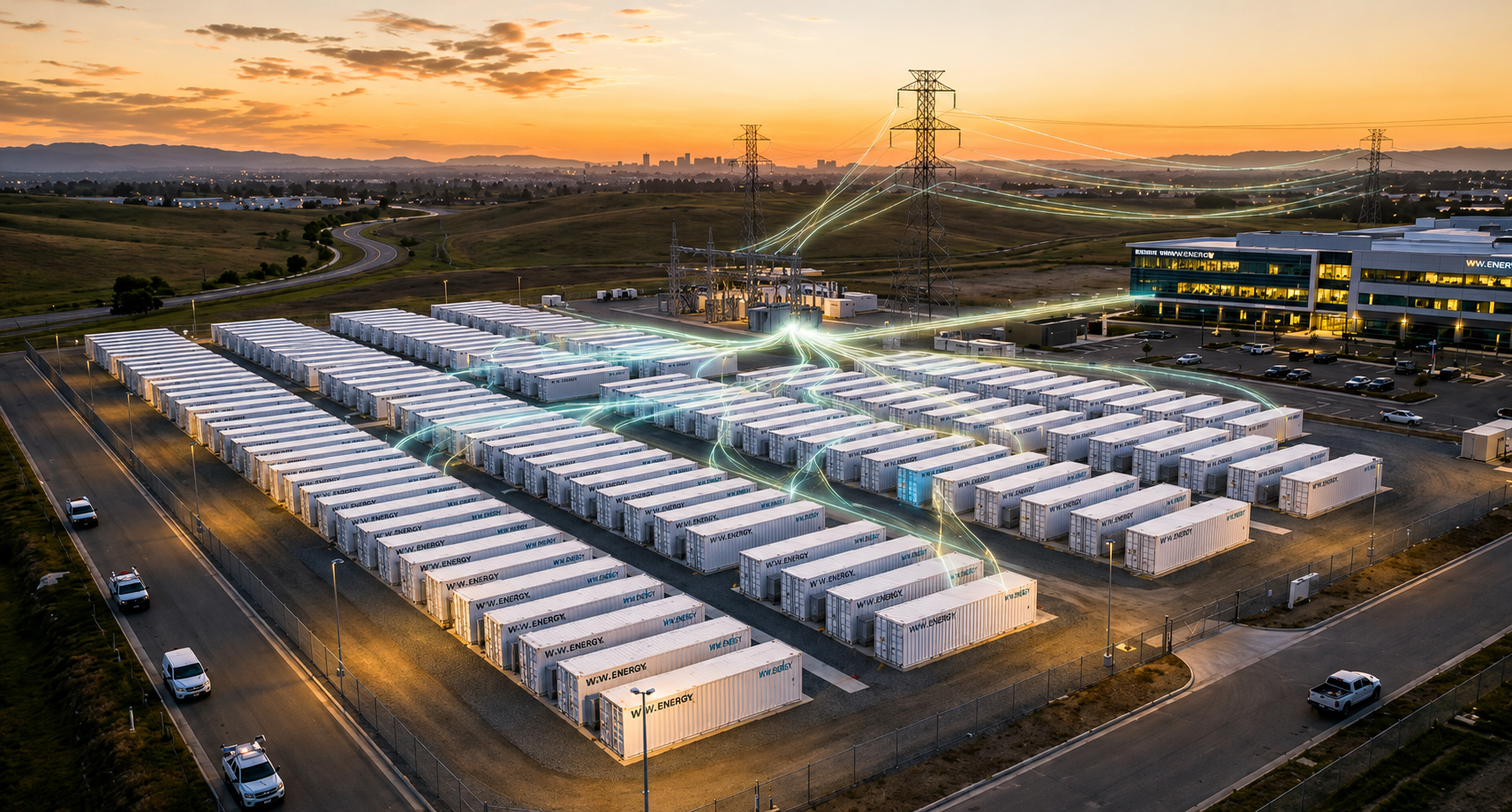
VoltSeal's approach is anchored in deploying storage at the point where energy is consumed rather than where it is generated. By installing modular containerised battery systems directly at C&I premises, the company addresses the immediate problem of diesel dependence while creating the physical infrastructure required for active energy management. The model compounds in value across three sequential phases, each building on the one before it.
Several structural advantages emerge from this architecture. i) Behind-the-meter deployment positions VoltSeal within the customer's own premises, enabling faster execution and real-world operational learning without the regulatory timelines that grid-scale infrastructure requires. ii) A capital-efficient procurement model allows the company to scale asset deployment while keeping its balance sheet lean, structuring the business for growth rather than capital intensity from the outset. iii) Operational continuity across its installed base gives VoltSeal a persistent relationship with deployed assets beyond the point of sale, creating the foundation for active energy optimisation and the aggregation of distributed storage into coordinated, market-responsive infrastructure over time. iv) The software intelligence layer being developed on top of this physical network is designed to process multiple variables simultaneously across the full fleet, evolving from site-level management into a multi-site optimisation engine that becomes more capable as deployment density increases and proprietary operational data accumulates.
This combination of physical infrastructure, commercial architecture, and data-driven intelligence is what distinguishes VoltSeal from hardware-only BESS vendors and software-only aggregation platforms. By owning both the asset layer and the optimisation layer, VoltSeal is positioned to deliver measurable savings from the first installation while building the networked infrastructure required for utility-scale grid services over time.
As India's energy transition moves beyond capacity addition toward system-level flexibility, the ability to store, dispatch, and optimise energy at the edges of the grid will define how effectively renewable capacity is utilised. VoltSeal is building the platform that enables this, converting distributed storage into a coordinated, yield-generating, and grid-stabilising layer for India's commercial and industrial energy system.