
Why we invested in altM

altM: Building India's Indigenous Platform for Bio-Based Specialty Chemicals
India's beauty, personal care, and specialty chemical industries are under growing pressure to replace petrochemical ingredients with bio-based alternatives, yet the supply chain for those alternatives has changed little in decades. India generates roughly 350 million tonnes of agricultural residue every year, and roughly half of it is still burned in the field, while residues such as bagasse are largely consumed as low-value boiler fuel. The technology to convert biomass into specialty chemicals exists, but the category has historically been led by European producers, most visibly in Scandinavia, whose processes are built around wood, a feedstock that is expensive and energy-intensive to break down, and the result is high input costs, a deep dependence on imports, and no domestic alternative for Indian formulators at the specialty-chemical tier.
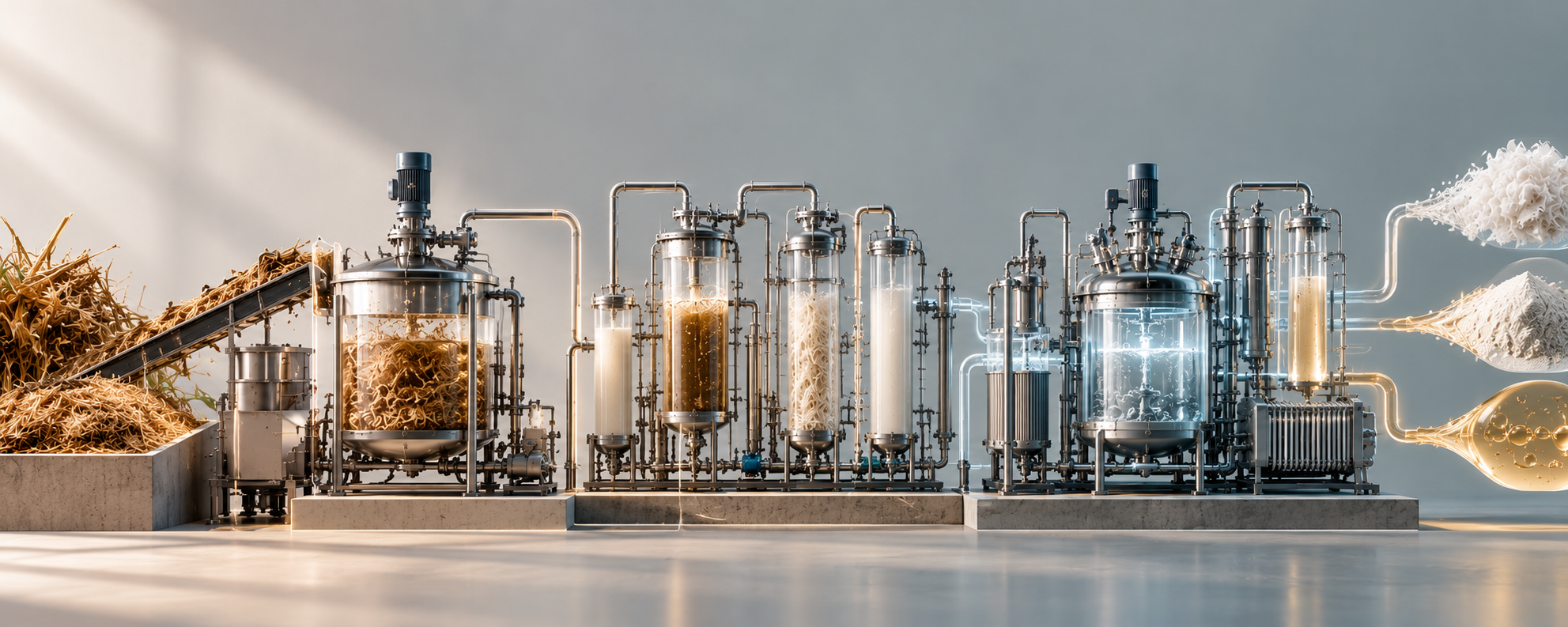
altM is addressing this constraint through altMorph, a proprietary thermochemical biorefinery that converts post-harvest residue such as sugarcane bagasse and rice straw into multiple high-value biochemicals, owning the process that turns a low-value waste stream into ingredients formulators can use. In doing so, it is building an indigenous platform for bio-based specialty chemicals, with the architecture to extend beyond personal care into polymers, adhesives, coatings, and energy materials.
Strategic Industry and Market Context
Consumer demand for natural and traceable ingredients, combined with corporate Scope 3 and net-zero commitments, has moved sustainable sourcing from a brand preference to a procurement priority. India's personal care industry is expanding rapidly across multinational brands and a widening set of independent brands , and its growing manufacturing base makes the country a natural hub for domestically produced ingredients, yet it remains heavily import-dependent at the specialty tier, sourcing 95% of its rheology modifiers alone from abroad at roughly INR 3,000 Cr a year .
The global bio-based chemicals market, valued at USD 109.5 billion in 2025, is projected to reach USD 249.4 billion by 2034 at a CAGR of 9.6%, with Asia-Pacific as its largest region, and within it the bio-based cosmetic and personal care ingredients segment, where altM’s first products sit, is expected to grow from USD 5.54 billion in 2024 to USD 9.14 billion by 2033, led by skin and sun care. The regulatory environment reinforces this trajectory, as SEBI's BRSR framework requires India’s top 1,000 listed companies to report on their ESG performance, with independent assurance now being phased in and value chain disclosures beginning with the top 250, placing upstream pressure on FMCG and personal care brands to green their ingredient supply, while European requirements on ingredient traceability raise the bar for Indian brands exporting to those markets. Together, these dynamics create structural support for an indigenous specialty chemicals platform built on India's own feedstock.
Key Advantages of altM's Platform